







Is SEO Dead in 2026? The Truth Every Business Should Know
Table of Contents
- The Bottom Line – Is SEO Dead in 2026?
- Why So Many Business Owners Believe SEO is Doomed
- What Really Happened to SEO from 2023 to 2026
- Google AI Explanations and Zero-Click Searches
- SEO, AEO, GEO: What’s the Difference Anyway?
- ChatGPT, Gemini & Perplexity and New Traffic Sources
- Is SEO Effective in 2026? Here’s the Data and Behavior
- The Building Blocks of Modern Visibility – EEAT, Authority and Entities
- Technical SEO is Mandatory Now
- Structured Data, Schema Markup and Knowledge Graph
- Local SEO and AI-Based Search
- A Framework to Be Visible in 2026 and Beyond
- The Most Common Mistakes Business Owners Make when They “Stop” SEO
- Future of SEO After 2026
- Conclusion
The Short Answer: Is SEO Dead in 2026?
Absolutely not, SEO is far from dead in 2026! While its methods have shifted, its core intent – finding, trusting, and selecting the right people through their search queries – is alive and well.
The truth is that SEO death is a bit more complicated than that. Searches themselves are becoming fragmented across a variety of surfaces. Google remains the big guy on campus, but it no longer needs to refer you somewhere else – often through an AI Overview – in order to answer your query. At the same time, more people than ever are querying ChatGPT, Gemini, and Perplexity.
But don’t worry! This does not make SEO unnecessary – it only broadens it. Companies must appear not just in conventional blue link listings, but AI responses, conversational search results, and voice assistants as well. That is the realm in which this article takes place.

Why So Many Business Owners Think SEO Is Dying
There is a consistent “SEO is dead” narrative that tends to reappear at least once a year, typically either following a significant update of Google’s algorithm or launching another AI product. Specifically, there are three reasons that fuel this narrative in 2026.
First, CTRs from organic searches are falling in many cases. If Google provides an answer to the query directly within AI Overview, users do not need to click on any website and go through the content to find the information. From the perspective of marketers, it looks like SEO does not work anymore, but in fact, the search result has changed.
Second, there is a trend toward using AI chat tools. More and more people are asking their questions to ChatGPT or Gemini directly without opening the browser and searching for the answer in Google. This change is relevant in terms of specific queries requiring heavy research or comparative analysis.
Third, there is confusion regarding how SEO is done now. About 10 years ago, SEO was all about keywords, backlinks, and meta tags. The business owners who did not keep up with the trends compare their outdated approach to a completely different search environment and conclude that SEO does not work anymore.
All of these claims are true. None of them indicates that SEO is dead. They show that the concept of SEO became broader.
What Actually Changed in Search Between 2023 and 2026
In order to understand how it all stands right now, it is essential to review what changes have been made.
For the past few years, Google has been actively implementing the large language model approach to the very top of the SERP. Where there used to be ten blue links, nowadays there is an answer generated using the AI, and the links come below.
This is a completely new way of presenting the information, although the ranking systems continue valuing such parameters as relevance, authority, user experience, and the quality of the content.
However, at the same time, the popularity of the AI-based content generators rose, and now people use them not only for having some fun but also for the research, comparing various services and making purchase decisions. These generators utilize the information that comes from the internet, and thus the same information that ranked well in traditional searches becomes the basis for creating answers by AI.
Therefore, businesses that already had high-quality structured useful content remained untouched by all these changes. It was those businesses with thin keyword-stuffed websites built only for rankings that got hit the hardest.
Google AI Overviews and the Rise of Zero-Click Search
What is a zero-click search? Zero-click searches occur when the user receives an answer right on the search engine results page (SERP) via a featured snippet, knowledge panel or AI overview, and does not have to click on any web page to find their answer.
While zero-click searches are nothing new, the introduction of AI Overviews has increased their prevalence, particularly for queries where the answer can be found in a short snippet (“what time zone is Arizona in”, “how long does a roof last”). Such queries had already been difficult to compete for click through rate even before the invention of AI Overviews.
However, here comes the part which most business owners do not realize: transactional and commercial searches – the searches which generate money (“roofing contractor near me”, “best CRM software for small business”) – remain largely unaffected. Researchers still need to compare and contrast multiple vendors, check reviews and visit web pages of actual businesses before buying anything. The AI Overviews sum up the results but seldom provide the basis for decisions.
In other words, the strategic move is not to stop doing SEO in light of zero-click searches; it is to stop competing for low-quality information-related queries, and focus more on the commercial and local queries.
SEO vs. AEO vs. GEO: What's the Difference?
This is probably one of the most sought out questions in the industry today, thus deserves a straightforward answer.
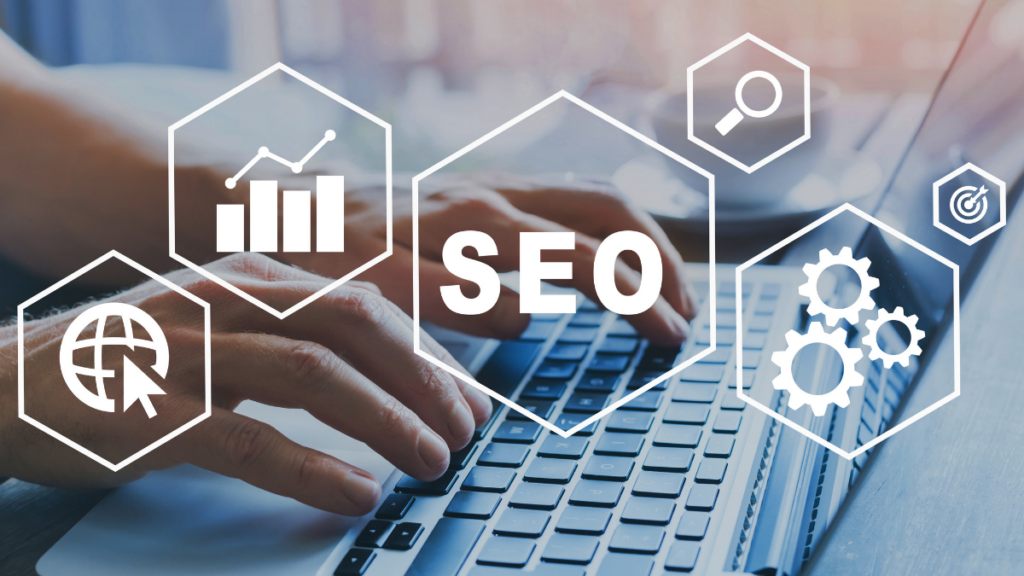
SEO (Search Engine Optimization) is the optimization of a website with respect to its rankings in standard search engine results – Google being the primary search engine here, although there are others such as Bing and so forth. The elements involved here include the keywords, technical optimization, backlinks, content and user experience.
AEO (Answer Engine Optimization) is the process of organizing content in such a way that it can be extracted to be used in response form. This includes featured snippets, voice search results and AI Overviews.
AEO depends a lot on the presence of clear answers in concise form, located towards the top of the page in Q&A form.
GEO (Generative Engine Optimization) is the optimization of the content in such a way that it is referenced and cited by the AI Generators such as ChatGPT, Gemini and Perplexity.
These AI Generators use the information from other websites for constructing their responses and so the optimization for these generators involve entity clarity, semantic relationship of the topic and expertise.
Discipline | Primary Goal | Where It Shows Up | Key Tactics |
SEO | Rank in traditional search results | Google, Bing organic listings | Keywords, backlinks, site speed, content quality |
AEO | Get directly quoted as “the answer” | Featured snippets, voice search, AI Overviews | Concise Q&A formatting, structured data, clear definitions |
GEO | Get cited/referenced by AI models | ChatGPT, Gemini, Perplexity responses | Topical authority, entity clarity, semantic depth, EEAT signals |
These three aren’t competing strategies. They’re layers of the same discipline. A well-structured, genuinely helpful, technically sound page tends to perform well across all three simultaneously, because they all reward clarity, relevance, and trustworthiness — just through different delivery mechanisms.
How ChatGPT, Gemini, and Perplexity Are Changing Where Traffic Comes From
These AI chat platforms do not create content out of thin air. Almost all of them operate on some version of retrieval augmented generation (RAG), which means that they draw from indexed content on the web, recent search results, or their training datasets in order to formulate their answers, and sometimes even cite their sources.
Why does it matter for businesses? The thing is that visibility within AI-generated answers is now a traffic channel on its own, apart from rankings through traditional search. For instance, Perplexity operates like a search engine but with built-in citation; hence a business featured within an answer generated by Perplexity gets a click just like in a regular search.
In other words, those businesses which appear within AI-generated answers are those which have authoritative and well-structured content visible through traditional searches. There is no such thing as a unique and mysterious “AI visibility” tactic apart from good old SEO.
Does SEO Still Work in 2026? What the Data and Behavior Actually Show
What continues to work effectively:
- Useful and informative content answering genuine queries of users.
- Technical effectiveness (speedy load, mobile responsiveness).
- Expertise, authority and real experience in the field of the presented content.
- Content covering certain topic in its entirety, not just some separate pages.
- Structured data that lets search engines know what your page is all about.
- What doesn’t work, or works less and less:
- Publication of thin content solely in order to satisfy the keyword.
- Buying poor links for irrelevant sites.
- Keyword stuffing and unnatural repetition of phrases.
- Usage of metadata as the major means of getting high rankings instead of good content.
- Ignoring page experience and website speed.
Those who announce the death of SEO are most likely using the list above. Those who have achieved great results and continue growing their business use the other one.
The New Foundations of Visibility: EEAT, Topical Authority, and Entities
Google Search Quality Rater Guidelines have traditionally put much emphasis on Experience, Expertise, Authoritativeness, and Trustworthiness (EEAT) framework for measuring content quality. EEAT becomes especially relevant in 2026 when it comes to determining what kind of content can be cited by an AI-powered system.
Firstly, experience stands for reflecting the real first-hand knowledge about the issue covered. An article on how to deal with ice dam damage written by a roofing company would easily outrank a generic content mill piece on the same subject.
Secondly, expertise stands for deep and precise knowledge of the information contained which may only come from a person having certain qualifications in the matter.
Authoritativeness is acquired through the long-term recognition of the website as a consistently covering certain subject, hence the importance of topical authority.
Finally, trustworthiness stands for the overall credibility of the website which includes such features as accurate and transparent representation of the material without false claims.
This brings us to the question of entity optimization or Entity SEO. Both search engines and AI algorithms are becoming capable of understanding the content as a set of entities and relations between them instead of isolated keyword strings.
Therefore, the better a business defines itself as a recognizable entity (in terms of consistent business information, use of structured data, and recognized topical authority in the niche), the easier it becomes for Google’s Knowledge Graph and AI algorithms to recognize and recommend it.
Technical SEO Isn't Optional Anymore
Technical SEO, which involves all processes needed for crawling, indexing, and rendering the site correctly, has become even more crucial in the AI-based search landscape.
The Core Web Vitals, which is a metric system measuring page loading time, interaction and visual stability introduced by Google, remains a basic need for every website. If you have a slow and clumsy website, it will ruin the value of the content despite how great it is.
Core Web Vitals aside, some of the technical elements that are important for success in 2026 are:
- A clean and crawlable website architecture with proper internal links
- Mobile-first approach because most searches occur on mobile devices
- Fast server-side response time and optimized images
- HTTPS properly set up and configured
- A clear XML sitemap and robots.txt file
- No duplicate content and correct canonical tags
If all these elements aren’t there, the best content can find it difficult to be indexed by Google, not to mention to be used in an AI Overview.
Structured Data, Schema, and the Knowledge Graph
The Structured data, data that is coded into the webpage by schema markup, will help both the search engine and AI to understand the exact thing that a webpage is about without making inferences based only on the unstructured data.
This becomes even more important in 2026 since AI systems use very specific signals to determine whether the information presented is true enough to be used or not. In other words, a webpage with FAQ Schema will provide an AI system with ready-made questions and answers, and not with the information that should be taken out from the structured paragraphs.
Also, structured data is important for the functioning of Google’s Knowledge Graph. Since the Google’s Knowledge Graph is the technology that Google uses to understand entities and their relationships, the webpage with correct schema markup and business information will easily be recognized and included into the Knowledge Graph.
Local SEO in the Age of AI Search
As AI search technologies continue to evolve into becoming mainstream, local SEO seems to have gained importance rather than losing it. In case anyone asks an AI assistant who the best electrician is nearby, the AI still requires access to credible and structured data about businesses operating locally – mostly via Google Business Profiles, local directories, and locally relevant web page content.
Those businesses that fail to consider such SEO basics as proper business listing, locally relevant content, actual customer testimonials, and consistent NAP information will face problems getting listed via local AI-powered recommendations no matter how well-optimized they might be in terms of general SEO.
A Practical Framework for Staying Visible in 2026
Companies seeking to prioritize areas that demand their effort and funds may do so by using a straightforward strategy based on
Priority | Focus Area | Example Action |
1 | Content quality and depth | Rewrite thin pages into comprehensive, genuinely helpful resources |
2 | Technical health | Audit Core Web Vitals and fix crawl/indexing issues |
3 | Structured data | Implement FAQ, Organization, LocalBusiness, and Article schema |
4 | Authority building | Earn genuine mentions, reviews, and citations from credible sources |
Those companies that take care of all four priorities tend to do well not only in conventional SEO but also in AI Overviews and citations by generative engines, since these priorities are not channel-specific – they are fundamentals.
Common Mistakes Businesses Make When They "Give Up" on SEO
Businesses that are the quickest to announce SEO’s demise are usually those committing one of these errors:
Completely eliminating content spend when they should be moving towards producing high-quality content that doesn’t appear as frequently.
Focusing on AI hacks for gaining visibility instead of establishing authority and building a framework for organic citations.
Neglecting to address any technical debt problems their website may have and attributing traffic loss to algorithm updates.
Using old traffic metrics when assessing current traffic without acknowledging that certain types of queries just do not yield as many clicks anymore.
Overlooking the basics of local SEO because they assume AI has made local listings and reviews obsolete.
The Future of SEO Beyond 2026
Search is going to continue fragmenting onto even more surfaces – voice assistants, chat interfaces powered by artificial intelligence, traditional search, and beyond. But the core philosophy is not going to change – both search engines and AI technologies are built with one purpose in mind, which is connecting users with accurate information.
Companies that create real authority for themselves, have solid technical bases, and continue to create value for their audiences with their content will always adapt to changes in search technology. Strategies will always be evolving. Core philosophies won’t.
Final Verdict and Next Steps
SEO is far from dead in 2026; it is just a bit more challenging than before. The problem lies not in SEO itself, but rather in the inability of the companies to adapt to the new challenges brought forth by the AI Overviews, conversational AI solutions, and increased requirements for the content quality.
The way out of the problem is clear, but requires some effort to accomplish: create relevant, properly structured content, solve the technical issues preventing your website from functioning optimally, incorporate the structured data allowing search engines and AI to understand your business better, and keep developing the local and topical authority of your business.
If you are considering the current state of affairs, an audit of your business’ SEO in terms of technical SEO, deep content, local presence, and AI optimization is the best place to start; thereafter, you can craft your personalized SEO strategy combined with web design and content marketing. Should you be looking to go the extra mile, you should consider AI SEO and Google Ads campaigns as an option.
Yes, indeed. Small businesses are those that can benefit from SEO the most. It is because local and niche search remains mostly commercial. People who are looking for something very specific in a certain geographical area already have the intention of purchasing and will make a purchase soon. AI Overviews will mostly affect general informational searches, but not transactional ones. Local listings, reviews, and services page of the small business remain quite valuable.
This period varies depending on industry competitiveness, but it usually takes about 3-6 months to get any results. In 6-12 months there is already some visible progress achieved. AI Overviews do not speed up this process. If anything, it requires more authority to get cited in the AI-generated answers.
Yes, but quality matters far more than quantity. A small number of relevant, earned backlinks from credible, topically related sites carries more weight than a large volume of low-quality links. Backlinks also contribute to the authority signals that influence whether AI systems consider a source credible enough to cite.
Is it possible for a page to rank in Google search and at the same time
Yes, this happens more often than businesses expect. Ranking in traditional search depends on different weighting of signals than being selected as a source for an AI-generated answer. A page can rank on page one while still lacking the clear structure, concise answers, or entity clarity that AI systems look for when choosing what to cite.
Yes. Keyword research still reveals what people are actually asking and searching for, which shapes both traditional content strategy and how well content aligns with the questions AI tools are answering. The tactics around keywords have changed — stuffing is out, intent-matching is in — but understanding search demand hasn't become less important.