



Integrated Digital Marketing Strategies for Sustainable Business Growth
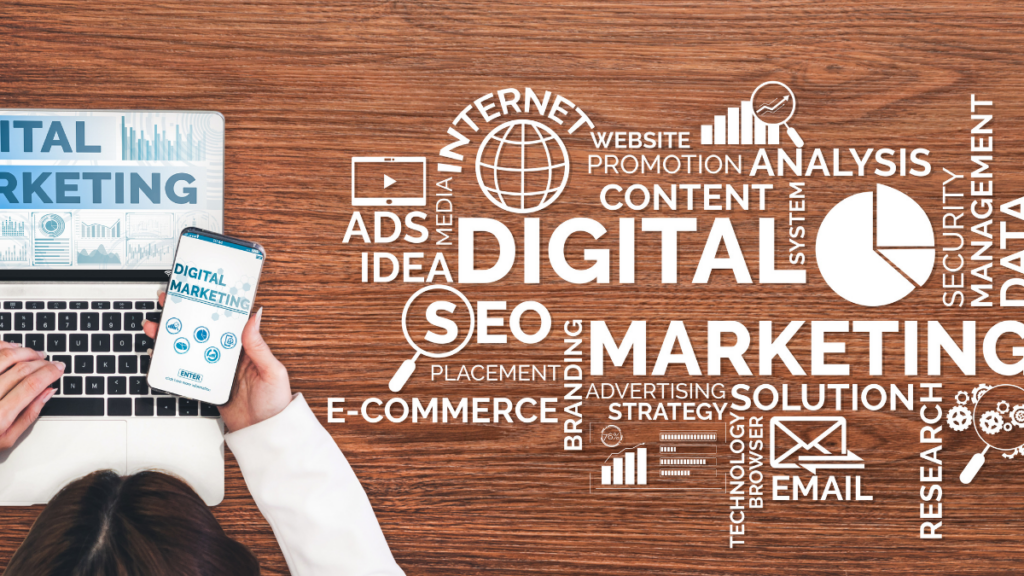
Through integration of digital marketing channels like SEO, content marketing, social media, e-mail marketing, paid advertising, and conversion techniques, a cohesive customer experience is achieved. Rather than trying to market using separate strategies for each channel individually, an organization can adopt an integrated digital marketing approach to boost its online presence, develop its brand image, attract qualified leads, and optimize its marketing effectiveness.
Consumers in today’s world do not engage with the business through a single channel. For instance, your potential consumer may come across you through search engines like Google, then reads your blog, sees you on the social media, clicks on the ad that you have paid for and converts after you send them an email.
This is what makes effective digital marketing go beyond merely having the presence on several different platforms.
What Is Integrated Digital Marketing?
Integrated digital marketing is a strategy that unites several online marketing channels into a coherent strategy.
Rather than viewing SEO, content, social media, email, PPC, and website optimization as isolated tasks, integrated marketing aligns each of these channels in order to strengthen them.
Keyword research done in SEO can reveal topics for your content strategy. The articles produced can be advertised through social media and email marketing. Google Ads can bid on high intent keywords whereas remarketing can target previous visitors of your website.
What we will see is that there is a higher level of consistency and that marketing channels work together towards common goals.
Some examples of what integrated digital marketing may include are the following:
- Search Engine Optimization (SEO)
- Content Marketing
- Social Media Marketing
- Email Marketing
- Google Ads and PPC
- Meta Advertising
- Website Optimization
- Conversion Rate Optimization
- Local SEO
- Analytics and Performance Tracking
- AEO and AI Search Optimization
It depends on you and your marketing needs!
Why Integrated Digital Marketing Matters for Business Growth
Consumers go through several stages in their journey through different marketing mediums like search engines, websites, social media sites, emails, online reviews, advertisements, and even artificial intelligence driven searches before making purchase decisions.
When such individual channels do not collaborate, customers can be given different information or suffer from information gaps.
Integration ensures consistency.
The SEO channel brings visitors to you organically. Your content solves the problems of those visitors. Your social media marketing increases recognition. Ad campaigns connect your products to intentful audiences. Emails nurture your prospective clients while your website provides an experience that ultimately helps turn those visitors into prospects or even buyers.
By integrating your marketing efforts, your organization can achieve some of the following things:
- Consistent brand messaging
- Reach customers on various digital platforms
- Generate high quality site traffic
- Create and cultivate leads
- Improve customer engagement
- Evaluate marketing results
- Optimize your budget
- Enhance brand awareness over the long haul
Integration does not require a company to use all the channels available for marketing.
Content Marketing: Building Authority and Customer Engagement
Quality content is still a cornerstone of any effective marketing strategy in the digital age.
Through blog articles, service pages, landing pages, videos, case studies, guides, FAQs, and similar content formats, companies get the chance to teach and establish their expertise among customers.
However, content produced and published without a well-developed strategy seldom yields positive and long-lasting effects.
The content needs to speak to customers’ needs and solve their problems according to your wider marketing goals. In addition, it needs to correspond to various stages of the buyer’s journey.
For instance, educational content can appeal to those looking for information about the issues they face, whereas service and comparative content can help more advanced buyers in making up their mind.
A good content marketing strategy is centered around:
- Search intent
- Needs of your audience
- Related topic areas
- Expert opinions
- EEAT signals
- Topical authority
- Link building strategy
- Freshness of content
- Potential to convert
Then the content can be used throughout social media, emails, advertisements, and other platforms.
Search Engine Optimization: Building Sustainable Organic Visibility
Good content is practically useless if consumers do not find it.
Search Engine Optimization (SEO) makes a website easier to crawl, understand, index, and discover via proper search results.
It makes sense then that SEO should be considered when designing and creating a website instead of being done at the very end.
- A complete SEO plan may consist of:
- Keyword Research/Search Intent
- On-Page SEO
- Technical SEO
- Local SEO
- Content SEO
- Internal Linking
- Website Design
- Schema Markup
- Core Web Vitals
- Link Building/Acquiring Backlinks
- Competitor Analysis
- Performance Tracking
In fact, there should be no goal of ranking for a lot of different keywords. The right SEO approach should attract the right kind of people who use search queries that relate to your products/services.
SEO paired with the process of content marketing will make it easier for companies to gain topic authority. It means that one will not have to write random articles but instead will work on the clusters related to desired topics.
AEO and AI Search Visibility: Preparing for Changing Search Behavior
Search is continually developing beyond the typical search result pages to offer users information using featured answers, conversational search, AI searches, and generation search results.
These developments make Answer Engine Optimization (AEO) and AI Search visibility relevant aspects of your digital approach.
Answer Engine Optimization ensures that the right questions get answered with useful and precise responses. Businesses can achieve this through succinct answers, proper heading structure, FAQs, content organization, entity signals, and authoritative content.
Possible ways businesses can optimize their site for AI Searches include:
- Semantic SEO
- Entity optimization
- Structured data
- Schema markup
- EEAT
- Topical authority
- Consistency of brand
- Original expertise
- Comprehensive content
- Accuracy of business information
It is crucial to understand that AEO does not override the SEO practices. The right tech foundations, content creation, site crawling, authority, and other SEO practices contribute to search visibility regardless of changes in search.
As a result, business should consider an approach of SEO+AEO+AI visibility.
Social Media Marketing: Building Brand Awareness and Engagement
Social media presents businesses with various possibilities of interacting with their audience, sharing content, proving their authority, and increasing their brand visibility.
Posting anything on any social media without a strategy does not represent an integrated approach.
You should have the same goals in terms of the content of both social media and your website, SEO, content marketing, and advertisement.
For instance, a thorough guide for your website will be presented through several posts, short videos, infographics, FAQ, and emails, turning a single strong piece of content into multiple ones.
Effective social media strategies might consist of:
- Educational posts
- Brand stories
- Customer reviews
- Industry news
- Campaigns
- Community building
- Video materials
- Content distribution from your website
- Generating leads
- Businesses need to focus on platforms where their targeted audience spends most of their time.
Email Marketing: Turning Interest Into Long-Term Relationships
Email marketing serves as the direct means of communication between the business and those individuals that have expressed interest.
When coupled with your website content, social media channels, and pay-per-click campaign, email marketing can be a powerful tool to assist in the nurturing of prospects.
It can be used for distributing valuable content to the audience, offering services, announcing deals, responding to inquiries, engaging current clients, and generating more revenue.
Email segmentation allows businesses to increase relevance.
In addition to delivering a single message to all subscribers, businesses are able to categorize audiences according to certain characteristics like interests, behaviors, previous contacts, and stages in the buyer’s journey.
The process of automation allows to deliver relevant content following the download of some information from the company’s site or making any other move.
In no case does it mean sending more emails.
Its purpose is providing valuable communication.
Google Ads and PPC: Reaching High-Intent Customers Faster
Organic methods of marketing can result in sustainable visibility; however, most of them take time to gain traction.
Using Google Ads and PPC enables companies to advertise themselves directly to potential customers actively looking for certain products or services.
An effective PPC campaign must consist of a well-planned alignment between keywords, ads, landing pages, and conversion goals.
For instance, if an ad is focused on a certain service, a visitor should be redirected to the corresponding page instead of the company’s home page.
PPC advertising is usually comprised of such tasks as:
- Keyword selection
- Intent analysis
- Targeting
- Negative keyword
- Keyword bidding
- Ad copy optimization
- Landing page optimization
- Conversion tracking
- Budget allocation
- A/B testing
Paid marketing can help to understand the audience by learning from the results.
Meta Ads and Paid Social Media
Social advertising is a great complement to search advertising in the way that allows companies to target people using interests, demographics, behaviors, engagement, and past interactions.
Sites like Facebook and Instagram can become great sources for building brand awareness, lead generation, remarketing, and showing your visually-oriented products/services.
A paid social media campaign can help you in an integrated approach by bringing back website visitors, promoting successful content, generating leads, or reaching out to the right audiences through your brand.
Consistency is important.
Users who see the ad must have the same experience while visiting the landing page, getting the offer, and communicating.
Your Website Connects Every Digital Marketing Channel
The business website acts as the hub for almost all the integrated online marketing campaigns.
SEO, social media, email, PPC, content marketing, and many other marketing activities lead users to the website. The site must have fast loading time, easy navigation, and be usable across mobile devices in order not to affect the performance of your online marketing efforts regardless of the efficiency of your campaigns.
A good business website should have:
- Fast loading time
- Mobile responsiveness
- Easy navigation
- Effective call-to-action elements
- Service information
- Trust indicators
- Accessible contact details
- SEO-friendly structure
- Secure web surfing environment
- Conversion-oriented landing pages
In this case, online marketing and website design efforts should go hand-in-hand.
How Integrated Digital Marketing Channels Work Together
The true value of integrated marketing comes out when different channels help one another.
For example, let’s look at the search for a service on Google.
The person finds an article created using the SEO strategy, visits your website and then encounters your brand via social media. He sees a remarketing ad reminding him of your offer and goes to your website again where he downloads some material and becomes your subscriber by subscribing to the newsletter. And a reminder mail from you provides him with additional details before he actually submits a request.
All of these happen in one customer funnel.
That’s why it might not always be correct to measure marketing channels only by their last-click conversion rate.
Measuring an Integrated Digital Marketing Strategy
Integrated marketing should be measurable.
Businesses should identify key performance indicators based on actual objectives rather than focusing exclusively on vanity metrics.
Depending on the campaign, useful KPIs may include:
- Organic search traffic
- Keyword visibility
- Qualified leads
- Conversion rate
- Cost per lead
- Cost per acquisition
- Return on ad spend
- Email engagement
- Organic conversions
- Paid conversions
- Local search visibility
- Calls and form submissions
- Customer acquisition trends
Regular analysis helps businesses understand which channels contribute to growth and where improvements are needed.
Common Integrated Digital Marketing Mistakes to Avoid
One of the major mistakes that companies commit is not seeing their marketing channels as one cohesive unit.
SEO team might be targeting one specific audience, while social media is pushing another message altogether. While paid media might be bringing people to a non-functional landing page, the email campaign might have nothing to do with the current messaging on your website.
Other typical mistakes include:
Targeting too many channels without proper resources
- Posting content without being familiar with search intent
- Missing out on technical SEO
- Bringing paid traffic to underoptimized pages
- Inconsistency with brand messaging
- Not tracking conversions
- Not catering to mobile audience
- Not paying any attention to customer reviews
- Looking only at traffic, not qualified leads
- Not updating old content
- Separating AI search from SEO
It is important to combine all those efforts and optimize.
Build a Digital Marketing Strategy Around Your Business Goals
There is no universal formula for digital marketing applicable to every business.
The Local SEO, Google My Business optimization, reviews, and pay per click are highly beneficial in promoting a local service provider business. Product SEO, content, pay per social media, email automation, and shopping are key elements to consider in the case of an e-commerce company. Finally, the priority list may differ when we speak about B2B businesses. Thought leadership, organic SEO, lead nurturing and pay per click can be mentioned.
The list of priorities varies from business to business.
At Contemporary Media Group, we enable businesses to put together website development, SEO, content, pay per click and pay per social media into an integrated approach to digital marketing.
The main idea of such an approach is not to run campaigns in various channels but to develop a digital marketing strategy.
Ready to strengthen your digital marketing strategy? Contact Contemporary Media Group at 973.512.3122 to discuss your business goals.
Frequently Asked Questions
What is Integrated Digital Marketing?
Integrated digital marketing is an approach to marketing that encompasses the use of several online channels – SEO, content, social media, email marketing, paid advertising, and website optimization. All of these should be used under a common plan to deliver consistent messages and make customer journey seamless.
Why Is It Important?
Customers usually go through a number of channels when interacting with the business, which requires integrating them to provide consistent messaging and improved experiences for customers and allow individual marketing actions to align with the general business goals.
Which Channels Should Integrated Digital Marketing Strategy Include?
It depends on the goals and target audience of your company. The most popular components include SEO, content marketing, social media, email marketing, Google ads, Meta ads, Local SEO, website optimization, and tracking of conversions.
How Do You Integrate SEO & Content Marketing?
SEO discovers search queries and opportunities for improving websites (topics, keywords, opportunities), and content delivers valuable information that will satisfy the customer’s needs. Properly done integration may improve SEO results while increasing topical authority.
Is AEO a Replacer for SEO?
AEO complements SEO efforts and makes the data delivered more understandable and focused on answers. However, SEO remains important to get the pages crawlable and indexable and for its technical and content elements’ performance, expertise, topical authority, and search visibility.
Will An Integrated Digital Marketing Strategy Work For Small Businesses?
An integrated digital marketing strategy may benefit even small businesses. There’s no need for all marketing channels to be applied. This will help to concentrate the available resources on the channels most likely to get to your customers.
How Much Time Does Integrated Digital Marketing Strategy Take to Work?
It depends on the channel. Paid ads can start generating traffic quite fast, but SEO, content marketing, development of expertise, topical authority, and organic visibility take time. Also, everything depends on competition, budgets, quality of the website, and brand presence.
How Do You Measure Integrated Digital Marketing Performance?
Results of an integrated digital marketing strategy should be measured with business goals and metrics like traffic, leads, conversion rates, customer acquisition cost, organic visibility, advertising results, call tracking, lead generation via forms, sales-related metrics, etc.


